


University of Washington School of Medicine Logo Genome Sciences

Faculty

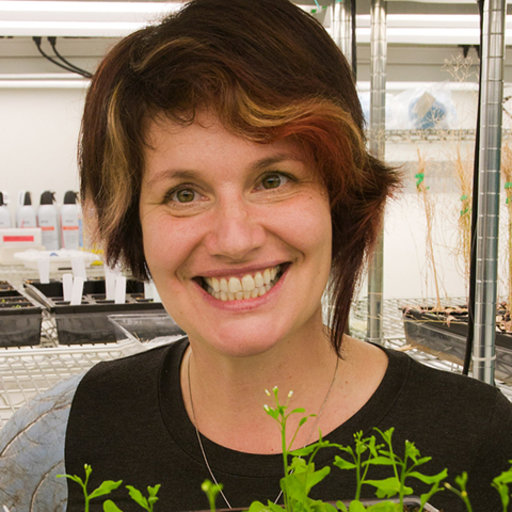
Christine Queitsch

Research:

Our research focuses on two related fields: the genetic architecture of complex traits and the role of gene regulation and protein folding in generating heritable phenotypic variation. We advance complex trait genetics by ascertaining uncharacterized sequence variation and by resolving the relative importance of additive variation and epistasis in complex traits. Lastly, to improve the genotype- phenotype map, we envision molecular markers, applicable in any organism, that predict the penetrance of genetic variants in a given individual.

To advance our understanding of plant gene regulation, we build on our recent success in mapping the A. thaliana cis-regulatory landscape in response to heat and light, in specific cell types, and across divergent strains. Future projects emphasize the functional exploration of newly identified regulatory phenomena. Prompted by recent findings, we explore the role of prions as developmental switches in plants.

Selected Publications:

Carlson KD, Sudmant PH, Press MO, Eichler EE, Shendure J, Queitsch C. MIPSTR: a method for multiplex genotyping of germline and somatic STR variation across many individuals. Genome Res. 2015 Feb 6. pii: gr.182212.114. [Epub ahead of print] PubMed PMID: 25659649.

Undurraga, SF, Press, MO, Legendre, M, Bujdoso, N, Bale, J, Wang, H, Davis SJ, Verstrepen, KJ, Queitsch, C. Background-dependent effects of polyglutamine variation in the Arabidopsis thaliana gene ELF3. Proc Natl Acad Sci U S A. 2012 Nov 20;109(47):19363-7. PMID: 23129635

Queitsch C, Carlson, K, Girirajan, S. Lessons from model organisms: phenotypic robustness and missing heritability in complex disease. PLoS Genet. 2012;8(11):e1003041. PMID: 23166511

Lachowiec J, Lemus T, Thomas JH, Murphy PJ, Nemhauser JL, Queitsch C. The Protein Chaperone HSP90 Can Facilitate the Divergence of Gene Duplicates. Genetics. 2013 Apr;193(4):1269-77. PMID: 23410833

Press MO, Li H, Creanza N, Queitsch C, Sourjik V, Borenstein E. Genome-Scale Co-Evolutionary Inference Identifies Functions and Clients of Bacterial Hsp90. PLoS Genet. 2013 Jul;9(7):e1003631 PMID: 23874229

Liachko I, Youngblood RA, Tsui K, Bubb KL, Queitsch C, Raghuraman MK, Nislow C, Brewer BJ, Dunham MJ. GC-rich DNA elements enable replication origin activity in the methylotrophic yeast Pichia pastoris. PLoS Genet. 2014 Mar 6;10(3):e1004169. PMID: 24603708

Rival P, Press MO, Bale J, Grancharova T, Undurraga SF, Queitsch C. The Conserved PFT1 Tandem Repeat is Crucial for Proper Flowering in Arabidopsis thaliana. Genetics. 2014 Oct;198(2):747-54. PMID: 2511613

Sullivan AM, Arsovski AA, Lempe J, Bubb KL, Weirauch MT, Sabo PJ, Sandstrom R, Thurman RE, Neph S, Reynolds AP, Stergachis AB, Vernot B, Johnson AK, Haugen E, Sullivan ST, Thompson A, Neri FV 3rd, Weaver M, Diegel M, Mnaimneh S, Yang A, Hughes TR, Nemhauser JL, Queitsch C, Stamatoyannopoulos JA. Mapping and Dynamics of Regulatory DNA and Transcription Factor Networks in A. thalianaCell Rep. 2014 Sep 25;8(6):2015-30. PMID: 25220462

Lachowiec J, Lemus T, Borenstein E, Queitsch C. Hsp90 Promotes Kinase Evolution. Mol Biol Evol. 2014 Sep 21. PMID: 252467015.

Carlson KD, Sudmant PH, Press MO, Eichler EE, Shendure J, Queitsch C. MIPSTR: a method for multiplex genotyping of germline and somatic STR variation across many individuals. Genome research. In press. bioRxivdoi: http://dx.doi.org/10.1101/007500

Lempe J, Lachowiec J, Sullivan AM, Queitsch C. Molecular mechanisms of robustness in plants.
Curr Opin Plant Biol. 2013 Feb;16(1):62-9. PMID: 23279801

Rosenberg SM, Queitsch C. Combating evolution to fight disease. Science. 2014 Mar 7;343(6175):1088-9. PMID: 24604189

Press MO, Carlson KD, Queitsch C. The overdue promise of short tandem repeat variation for heritability. Trends Genet. 2014 Nov;30(11):504-512. PMID: 25182195

Devin Schweppe

Adaptive Mass Spectrometry

Intelligent data acquisition in mass spectrometry driven proteomics can enhance the accuracy and efficiency of proteomics data collection. Using methods like real-time data base searching (search a spectra in less than 10 milliseconds) we are building adaptive strategies to harness spectral data to determine quantitative disparities between cellular states.

Systems Proteomics

Modern proteomics enables quantitation of up to 10,000 proteins from complex cellular matrices. At the interface of cell biology, biochemistry and proteomics, we are attempting to understand how proteins govern key cellular pathways involved in normal cellular function and disease (e.g. cancer).

Informatics

The lab is actively developing programs to enable the above projects geared towards adaptive instrument control, data analysis, and data interpretation. Projects under development can be found at our GitHub page.

Host-pathogen Interactions

Multidrug resistant pathogens are a continuing national health concern. To address this we are investigating how pathogen proteins and pathways that govern virulence affect host cellular state through the lens of the proteome.

Jay Shendure

Research:

The Shendure Lab is part of the Howard Hughes Medical Institute, Brotman Baty Institute for Precision MedicineSeattle Hub for Synthetic Biology and the Department of Genome Sciences at the University of Washington (Seattle, WA). The mission of our lab is to develop and apply new technologies and methods at the intersection of genomics, molecular biology and developmental biology. Our research group pioneered exome sequencing and its earliest applications to gene discovery for Mendelian disorders and autism; cell-free DNA diagnostics for cancer and reproductive medicine; massively parallel reporter assays, saturation genome editing; combinatorial single cell molecular technologies; and genome editing based molecular recording technologies. These are listed below as links to representative publications in each area.

Developing New Molecular Methods | Genomic Approaches to Developmental Biology | Massively Parallel Functional Genomics
Translating Genomics to the Clinic | Genetic Basis of Human Disease | Genome Sequencing Technologies

Selected Publications:

Full List of Publications via PubMed

Lea Starita

Research 

A barrier to fully realizing the promise of genome-guided precision medicine is the massive number of Variants of Certain Significance (VUS) that are identified by genetic testing. Variants are designated VUS when there is insufficient evidence to classify them as pathogenic or benign and, importantly, they can’t be used to guide clinical decisions. VUS are confusing to patients, maddening to doctors and exacerbate the inequities in genetic medicine because they are more likely to be identified in individuals from underserved populations.

The main goal of the Starita lab is to put an end to Variants of Uncertain Significance (VUS) to make genetic medicine more informative, equitable and impactful. Our lab has shown that multiplexed assays of variant effect (MAVE) can powerfully inform variant classification to move VUS to more definitive classifications. To continue toward this goal, my current research program has four main directions: 1) scaling existing MAVEs for broad application, 2) developing new MAVE technology to unlock access to new and more informative phenotypes, and 3) working with local and international partners to develop guidelines for clinical translation and 4) working with clinical partners to build resources to increase MAVE uptake in the clinic.

Dr. Starita is also the co-director of the Brotman Baty Advanced Technology lab (BAT-lab). The BAT-Lab allows researchers at UW and beyond to access cutting edge genomic technologies, find support for ambitious projects and we power the Seattle Flu Alliance

Highlighted publications

Starita LM, Ahituv N, Dunham MJ, Kitzman JO, Roth FP, Seelig G, Shendure J, Fowler DM. Variant Interpretation: Functional Assays to the Rescue. Am J Hum Genet. 2017 Sep 7;101(3):315-325. doi: 10.1016/j.ajhg.2017.07.014. PMID: 28886340; PMCID: PMC5590843.

Findlay GM, Daza RM, Martin B, Zhang MD, Leith AP, Gasperini M, Janizek JD, Huang X, Starita LM,* Shendure J*. Accurate classification of BRCA1 variants with saturation genome editing. Nature. 2018 Oct;562(7726):217-222. doi: 10.1038/s41586-018-0461-z. Epub 2018 Sep 12. PMID: 30209399; PMCID: PMC6181777.

Fayer S, Horton C, Dines JN, Rubin AF, Richardson ME, McGoldrick K, Hernandez F, Pesaran T, Karam R, Shirts BH, Fowler DM,* Starita LM,* Closing the gap: Systematic integration of multiplexed functional data resolves variants of uncertain significance in BRCA1, TP53, and PTEN. Am J Hum Genet. 2021 Dec 2;108(12):2248-2258. doi: 10.1016/j.ajhg.2021.11.001. Epub 2021 Nov 17. PMID: 34793697; PMCID: PMC8715144.

Srivatsan S, Heidl S, Pfau B, Martin BK, Han PD, Zhong W, van Raay K, McDermot E, Opsahl J, Gamboa L, Smith N, Truong M, Cho S, Barrow KA, Rich LM, Stone J, Wolf CR, McCulloch DJ, Kim AE, Brandstetter E, Sohlberg SL, Ilcisin M, Geyer RE, Chen W, Gehring J; Seattle Flu Study Investigators, Kosuri S, Bedford T, Rieder MJ, Nickerson DA, Chu HY, Konnick EQ, Debley JS, Shendure J, Lockwood CM,* Starita LM,* SwabExpress: An End-to-End Protocol for Extraction-Free COVID-19 Testing. Clin Chem. 2021 Dec 30;68(1):143-1e52. doi: 10.1093/clinchem/hvab132. PMID: 34286830; PMCID: PMC8406859.

Florence M. Chardon, Chase C. Suiter, Riza M. Daza, Nahum T. Smith, Phoebe Parrish, Troy McDiarmid, Jean-Benoît Lalanne, Beth Martin, Diego Calderon, Amira Ellison, Alice H. Berger, Jay Shendure, Lea M. Starita A multiplex, prime editing framework for identifying drug resistance variants at scale. bioRxiv 2023.07.27.550902; doi: https://doi.org/10.1101/2023.07.27.550902

Please find the full list here: Google Scholar profile

Willie Swanson

Research:

A recurring observation in the study of reproductive proteins is their rapid, adaptive evolution. This phenomenon occurs in organisms diverse as diatoms and humans. The long-term goal of my research is to understand the diversity of reproductive proteins and the functional consequences of their divergence, which could involve problems in fertility and speciation due to a mismatch of sperm-egg recognition molecules. This would be analogous to matches in class I major-histocompatibility-complex molecules necessary for successful skin grafts. Therefore, understanding the evolutionary dynamics of reproductive proteins may be directly relevant to problems in fertility. Our lab works on a variety of organisms, including Drosophila, abalone (Haliotis), and mammals. A common theme throughout my research is identifying genes subjected to positive selection (adaptive evolution), indicating potentially functionally important candidate genes. Once identified using comparative genomic approaches, these proteins are targets for further functional characterization.

Selected Publications:

Swanson, W.J. and Vacquier, V.D. 1998. Concerted evolution in an egg receptor for a rapidly evolving abalone sperm protein. Science 281:710-712.

Swanson, W.J., Aquadro, C.F. and Vacquier, V.D. 2001. Polymorphism survey in abalone fertilization proteins is consistent with the neutral evolution of the egg’s receptor for lysine (VERL) and positive Darwinian selection of sperm lysin. Molecular Biology and Evolution 18:376-383.

Swanson, W.J., Clark, A.G., Waldrip-Dail, H.M., Wolfner, M.F., and Aquadro, C.F. 2001. Evolutionary EST analysis identifies rapidly evolving male reproductive proteins in Drosophila. Proceedings of the National Academy of Sciences, USA 98: 7375-7379.

Swanson, W.J., Yang, Z., Wolfner, M.F., and Aquadro, C.F. 2001. Positive Darwinian selection drives the evolution of several female reproductive proteins in mammals. Proceedings of the National Academy of Sciences, USA 98: 2509-2514.

Swanson, W.J. and Vacquier, V.D. 2002. Rapid evolution of reproductive proteins. Nature Reviews Genetics 3: 137 144.

Galindo, B.E., Vacquier, V.D., Swanson, W.J. 2003. Positive selection in the egg receptor for abalone sperm lysin. Proceedings of the National Academy of Sciences, USA. 100: 4639-4643. 

Swanson, W.J. 2003. Adaptive evolution of genes and gene families. Current Opinion in Genetics and Development. 13: 617-622. 

Swanson, W.J., Wong, A., Wolfner, M.F., and Aquadro, C.F. 2004. Evolutionary expressed sequence tag analysis of Drosophilafemale reproductive tracts identifies genes subjected to positive selection. Genetics168: 1457-1465. 

Clark, N. L. and Swanson, W. J. 2005. Pervasive Adaptive Evolution of Primate Seminal Fluid Proteins. PLoS Genetics1: e35.

Aagaard, J.E., Yi, X., MacCoss, M.J. and Swanson, W.J. 2006. Rapidly Evolving Zona Pellucida Domain Proteins are a Major Component of the Vitelline Envelope of Abalone Eggs. Proceedings of the National Academy of Sciences, USA. 103: 17302-17307.

Kelley, J.L., Madeoy, J., Calhoun J.C., Swanson, W.J. and Akey, J.M. 2006 Genomic Signatures of Positive Selection in Humans and the Limits of Outlier Approaches. Genome Research, 16: 980 – 989.

Gapser, J. and Swanson, W.J. 2006. Molecular Population Genetics Of The Gene Encoding The Human Fertilization Protein Zonadhesin Reveals Rapid Adaptive Evolution. American Journal Human Genetics 5: 820-830.

Hamm, D. Mautz, B. S., Wolfner, M.F., Aquadro, C. F. and Swanson, W. J. 2007. Evidence for amino acid diversity-enhancing selection within humans and among primates at the candidate sperm receptor gene PKDREJ. American Journal Human Genetics 81: 44-52.

Clark, N. L., Findlay, G. and Swanson, W.J. 2007. Selection and duplication of abalone sperm lysin in an allopatric population. Molecular Biology and Evolution, 24: 2081 – 2090.

additional publication listings available via PubMed

James Thomas

Research:

Research focus in the Thomas lab has recently shifted to molecular evolution, especially the evolution and function of gene families implicated in environmental interactions and other rapidly changing selective pressures. Work is mostly on nematode and mammalian gene families, with some comparative analyses to other groups.

Gene families are abundant and pervasive in multicellular organisms, where they arise by duplication and diversification of existing genes. The mechanism of duplication and the patterns of diversification that occur subsequent to duplications are poorly understood and probably underlie critical aspects of organismal evolution. Our analysis of positive selection (natural selection to change amino acid sequence) indicates that genes in many families undergo rapid change at specific protein sites. The patterns of these changes often provide strong insight into the function and evolution of the genes. For example, in nematodes and plants, most of the large families of substrate specificity adapter proteins for poly-ubiquitination are under strong positive selection in their substrate-binding domain. This pattern suggests that the adapter substrates have changed over time and that the adapter proteins are selected to maintain substrate binding. A simple explanation is that these proteins function in innate immunity to target foreign proteins for proteolysis. Another example is the rapidly expanded C2H2 (Kruppel-like) zinc finger protein family in mammals, many members of which are under subject to strong positive selection in the nucleotide contacting residues of the zinc fingers. The patterns of family expansion and positive selection suggest that many mammalian zinc finger genes have been selected to increase family complexity (gene number) and to change their regulatory targets (DNA binding specificity). These changes may contribute to the evolutionary plasticity of morphology and development in mammals.

Selected Publications:

Thomas, J.H. 2005. Global analysis of homologous gene clusters in C. elegans reveals striking regional cluster domains. In press, Genetics. 

Choy, R.K.M., J. Kemner, and J.H. Thomas. 2005. Fluoxetine-resistance genes in C. elegans function in the intestine and may regulate lipid metabolism. In press, Genetics. 

Efimenko, E., K. Bubb, H.Y. Mak, T. Holzman, G. Ruvkun, M.R. Leroux, J.H. Thomas, and P. Swoboda. 2005. Analysis of xbx genes in C. elegans. Development 132, 1923-1934. 

Thomas, J.H., J.L. Kelley, H.M. Robertson, K, Ly, and W.J. Swanson. 2005. Adaptive evolution in the SRZ Chemoreceptor families of C. elegans and C. briggsae. PNAS 102, 4476-4481. 

Stewart, M.K., N. Clark, G. Merrihew, E. Galloway, and J.H. Thomas. 2005. High genetic diversity in the chemoreceptor superfamily of C. elegans. Genetics 165, 1985-1996. 

Li, J., G. Brown, M.A. Ailion, S. Lee, and J.H. Thomas. 2004. NCR-1 and NCR-2, the C. elegans homologues of the human Niemann-Pick type C1 disease protein, function upstream of DAF-9 in the dauer formation pathways. Development 131, 5741-5752. 

McElwee, J.J., E. Schuster, E. Blanc, J.H. Thomas, D. Gems. 2004. Shared transcriptional signature in C. elegans dauer larvae and long-lived daf-2 mutants implicates detoxification system in longevity assurance. J. Biol. Chem. 279, 44533-44543. 

Petersen, C.I., T.R. McFarland, S.Z. Stepanovic, P. Yang, D.J. Reiner, K. Hayashi, A.L. George, D.M. Roden, J.H. Thomas, and J.R. Balser. 2004. In vivo identification of genes that modify ether-a-go-go-related gene activity in Caenorhabditis elegans may also affect human cardiac arrhythmia. PNAS 101, 11773-11778.

Cole Trapnell

Research:

Dr. Trapnell studies stem cells and differentiation, primarily using high throughput transcriptome sequencing. He earned his Ph.D. in Computer Science from the University of Maryland, College Park, where he was jointly advised by Steven Salzberg and Lior Pachter. As a postdoc in John Rinn’s lab at Harvard’s Stem Cell and Regenerative Biology department, he pioneered methods for analyzing differentiation with single cell transcriptome sequencing.  He is the principal developer of several widely used open-source software tools for analyzing high-throughput sequencing experiments. At the University of Washington, his lab will focus on finding genes that govern stem cell maintenance and cell differentiation, primarily through single-cell genomics. The lab will operate at the interface between genomics and experimental cell biology to answer how cells make fate decisions.

Selected Publications:

KCole Trapnell, Davide Cacchiarelli, Jonna Grimsby, Prapti Pokharel, Shuqiang Li, Michael Morse, Niall J Lennon, Kenneth J Livak, Tarjei S Mikkelsen & John L Rinn, “The dynamics and regulators of cell fate decisions are revealed by pseudotemporal ordering of single cells”, Nature Biotechnology, doi:10.1038/nbt.2859 (2014)

Lei Sun*, Loyal A Goff*, Cole Trapnell*, Ryan Alexander, Kinyui Alice Lo, Ezgi Hacisuleyman, Martin Sauvageau, Barbara Tazon-Vega, David R Kelley, David G Hendrickson, Bingbing Yuan, Manolis Kellis, Harvey F Lodish, John L Rinn, “Long noncoding RNAs regulate adipogenesis”, PNAS, 2013 

Cole Trapnell*, David Hendrickson*, Martin Sauvageau, Loyal Goff, John Rinn, Lior Pachter, “Differential analysis of gene regulation at transcript resolution with RNA-seq”, Nature Biotechnology, 2012  

Cole Trapnell, Brian A. Williams, Geo Pertea, Ali Mortazavi, Gordon Kwan, Marijke J. van Baren, Steven L. Salzberg, Barbara J. Wold, and Lior Pachter. “Transcript assembly and abundance estimation from RNA-Seq reveals thousands of new transcripts and switching among isoforms.” Nature Biotechnology, 28, 511–515, doi:10.1038/nbt.1621 (2010)

Cole Trapnell, Lior Pachter, and Steven L. Salzberg, “TopHat: discovering splice junctions with RNA-Seq.”Bioinformatics (2009), doi:10.1093/bioinformatics/btp120

Ben Langmead, Cole Trapnell, Mihai Pop, and Steven L. Salzberg, “Ultrafast and memory-efficient alignment of short DNA sequences to the human genome.” Genome Biology, 10:R25 (2009) 

additional publication listings available via PubMed

Judit Villén

Research:

The Villén Lab seeks to develop and apply novel technologies for proteome characterization to answer fundamental questions in cell biology and disease. We use quantitative mass spectrometry to measure dynamic changes in protein abundances, protein post-translational modification states, and to characterize interaction partners across multiple cellular states.

We are particularly interested in studying protein phosphorylation as a general regulatory mechanism in the cell involved in a myriad of functions: how phosphorylation is integrated into the multiple responses to shape the proteome, and how signaling circuits evolved to accommodate proteome functional complexity.

Selected Publications:

Beausoleil, S. A., Villen, J., Gerber, S. A., Rush, J. & Gygi, S. P. (2006). A probability-based approach for high-throughput protein phosphorylation analysis and site localization. Nat Biotechnol 24, 1285-1292.

Villen, J., Beausoleil, S. A., Gerber, S. A. & Gygi, S. P. (2007). Large-scale phosphorylation analysis of mouse liver. Proc. Natl. Acad. Sci. U. S. A. 104, 1488-1493.

Guo, A., Villen, J., Kornhauser, J., Lee, K. A., Stokes, M. P., Rikova, K., Possemato, A., Nardone, J., Innocenti, G., Wetzel, R., Wang, Y., MacNeill, J., Mitchell, J., Gygi, S. P., Rush, J., Polakiewicz, R. D. & Comb, M. J. (2008). Signaling networks assembled by oncogenic EGFR and c-Met. Proc. Natl. Acad. Sci. U. S. A. 105, 692-697.

Villen, J. & Gygi, S. P. (2008). The SCX/IMAC enrichment approach for global phosphorylation analysis by mass spectrometry. Nat Protoc 3, 1630-1638.

Villen, J., Beausoleil, S. A. & Gygi, S. P. (2008). Evaluation of the utility of neutral-loss-dependent MS3 strategies in large-scale phosphorylation analysis. Proteomics 8, 4444-4452.

Baek, D.*, Villen, J.*, Shin, C.*, Camargo, F. D., Gygi, S. P. & Bartel, D. P. (2008). The impact of microRNAs on protein output. Nature 455, 64-71. (* equal contribution)

Holt, L. J.*, Tuch, B. B.*, Villen, J.*, Johnson, A. D., Gygi, S. P. & Morgan, D. O. (2009). Global analysis of Cdk1 substrate phosphorylation sites provides insights into evolution. Science 325, 1682-1686. (* equal contribution)